How to Apply AI Effectively in Finance
Over the past five years as an Interim CFO and Director in transition, I’ve witnessed how AI can radically transform finance functions — but only when applied with the right methodology. Too many organisations adopt a “let’s automate everything” approach, leading to disappointing results, tool sprawl, and frustrated teams.
The real key lies in understanding that finance tasks have fundamentally different cognitive natures. A structured Task Classification Framework is what separates superficial pilots from sustainable value creation.
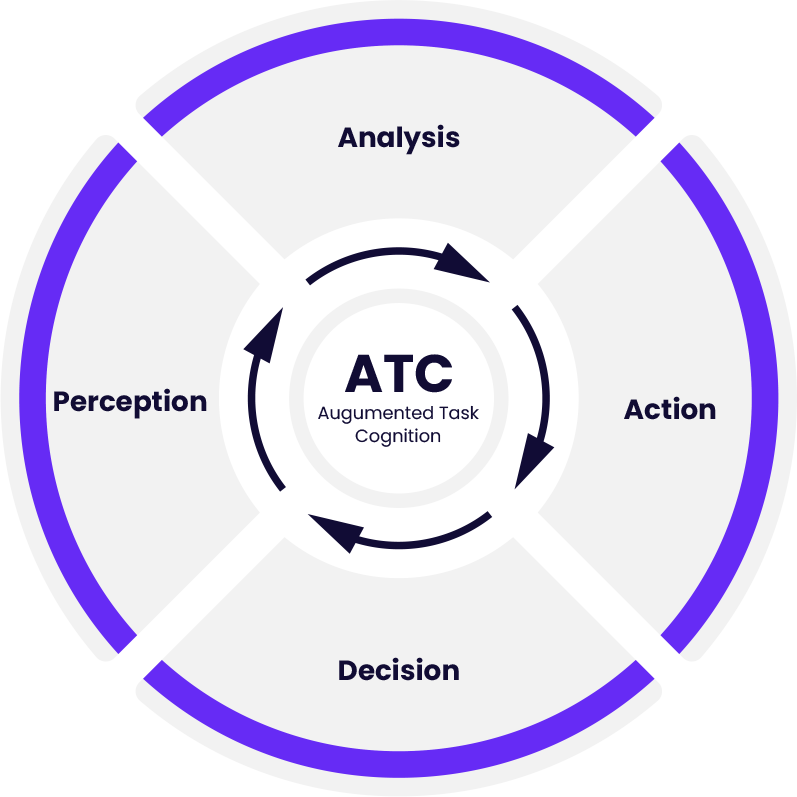
Task Cognition – From Overloas to Augmented Thinking
A Recent Real-World Example
At Laurent Membrez SA (construction sector, ~60 M CHF), the finance team was overwhelmed: manual reconciliations, fragmented reporting, and constant pressure to improve liquidity visibility while shortening closing cycles.
Instead of rushing into new tools, we started by classifying and decomposing processes. This simple step revealed clear opportunities:
Rules-based tasks
(transaction matching, basic reconciliations)
ideal for RPA and OCR automation.
Analytical & predictive tasks
(cash forecasting, variance analysis)
perfect for machine learning models.
Judgmental & interpersonal tasks
(final validation, stakeholder communication)
remain human-led, but greatly augmented by AI insights.
Results achieved
Implementation of reliable 13-week cash flow forecasting, reduction of monthly closing from m+10 to m+5, creation of a complete fixed asset register from scratch, and a noticeable shift of the team from firefighting to high-value strategic work.
Similar successes occurred at ADV and during previous Shared Service Center migrations, where this task-first approach accelerated ERP benefits and process optimisation.
The Task Classification Framework
Step 1: Inventory & Map
Identify and map core processes (month-end close, cash management, budgeting, audit preparation, risk assessment, etc.).
Step 2: Classify by Cognitive Nature
Rules-based / Repetitive
High automation potential (RPA, OCR): invoice processing, data entry, standard reconciliations.
Research-intensive
NLP and retrieval-augmented AI: compliance checks, document verification, regulatory research.
Analytical / Predictive
Machine Learning: forecasting, anomaly detection, variance analysis, unit economics.
Creative / Judgmental
Generative AI as co-pilot: scenario modelling, risk interpretation, strategic planning, narrative creation.
Coordinative / Interpersonal
AI-supported insights + human leadership: cross-functional alignment, board reporting, change management.
Step 3: Decompose, Prioritise & Match Tools
Break processes into subtasks. Prioritise automation of non-value-added activities first. Then select the right tools (e.g., BlackLine or FloQast for financial close, Kyriba for treasury, DataSnipper for audit, Power BI Copilot or custom ML for forecasting).
Step 4: Implement, Measure & Iterate
Combine technology deployment with strong change management, training, and continuous feedback loops.
Why This Framework Works — Backed by Research
This approach is not theoretical. It aligns with leading industry research:
- Gartner highlights that finance tasks vary greatly in AI automation potential — routine activities (data entry, reconciliations) are highly automatable, while complex judgment and strategic communication require human oversight.
- Studies from KPMG and others on Intelligent Process Automation (IPA) show that combining RPA with AI/ML delivers far superior results than RPA alone.
- Cognitive task analysis research emphasises the importance of decomposing work according to its intellectual demands, allowing AI to augment rather than inappropriately replace human strengths.
By respecting how the human brain actually operates in finance, this method delivers quick wins that build momentum, reduces resistance to change, and ensures AI truly augments decision-making.
Benefits for Finance Leaders and Teams
Productivity gains without headcount reduction — capacity is freed for strategic work.
Better risk management and more accurate forecasting.
Higher team engagement professionals move away from repetitive tasks toward fulfilling, high-value activities.
Scalability works equally well for SMEs and larger international groups.
In today’s fast-evolving environment, finance leaders cannot afford inefficient AI experiments. A methodological, task-first approach transforms technology from a hype-driven cost into a genuine competitive advantage.
Ready to make cash visibility your new competitive edge?
Book a no-obligation 30-minute diagnostic call and I’ll help you identify your top 3 priorities and quick wins — at no cost.
Take immediate control
of your financial operations
Do not let cultural friction or regulatory blind spots derail your integration.
Deploy proven interim financial leadership.