Making AI a Strategic Asset
Making AI a Strategic Asset in Finance Beyond Short-Term Patches – A People-First Transformation
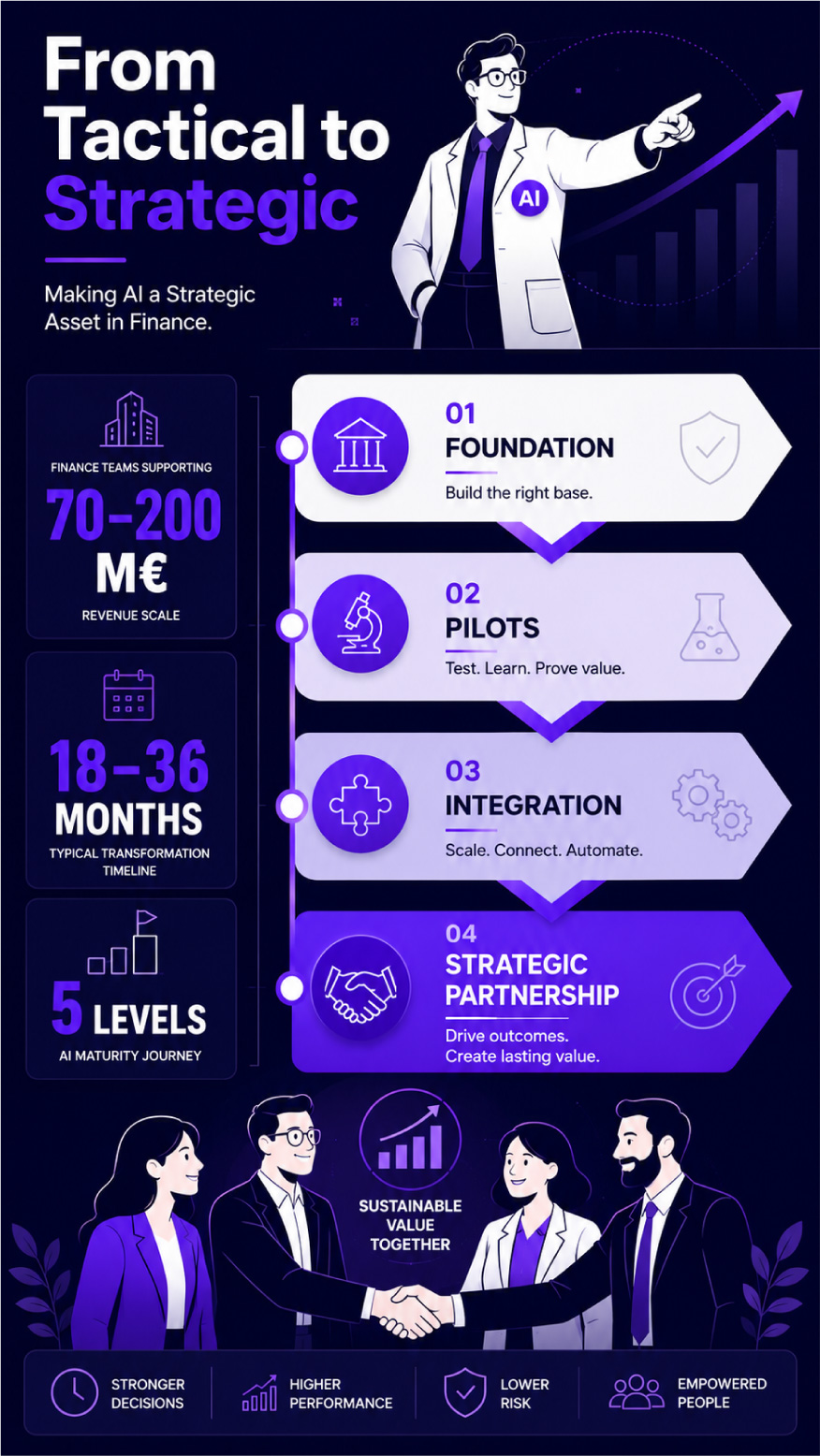
In finance departments of mid-sized companies, teams of around a dozen professionals often juggle month-end closes, cash flow forecasts, budget variances, compliance, and endless reporting — all while supporting businesses generating €70M to €200M in revenue.
AI promises automated reports, smarter forecasts, and faster reconciliations. Yet many organizations treat it as a quick fix: bolting on tools without addressing the deeper organizational changes needed. The result? Tool sprawl, skepticism, and disappointing returns.
Figure 1: Long-Term AI Transformation Doctor AI guidant l’équipe finance vers un partenariat stratégique sur plusieurs années – du chaos tactique à la création de valeur durable.
This article is a practical guide to making AI a true strategic asset — transforming not just processes, but roles, skills, culture, and ways of working.
Evolution of Roles
Routine tasks (data consolidation, basic reconciliations, standard reporting) are increasingly automated. Job descriptions shift from “doing the work” to “overseeing, interpreting, and acting on” AI outputs. Analysts spend less time crunching numbers and more time on scenario modeling and business advising. Controllers and CFOs gain bandwidth for true strategic partnership. In lean teams, this rarely means headcount reduction — it creates capacity to support growth without adding staff.
The Skills Gap
Technical finance expertise remains essential, but new hybrid
skills become critical:
AI literacy (prompting effectively, validating outputs, spotting limitations)
Data fluency
Strategic thinking and
business communication
Most finance professionals have strong analytical minds — they
are well-positioned to adapt.
Culture and
Change Management
Fears around job security and technology overload are real. Successful teams address them head-on: AI is positioned as an augmentation tool that removes drudgery, not a replacement for human judgment. Involving the team early in identifying pain points and piloting tools builds ownership.
A Strategic Framework
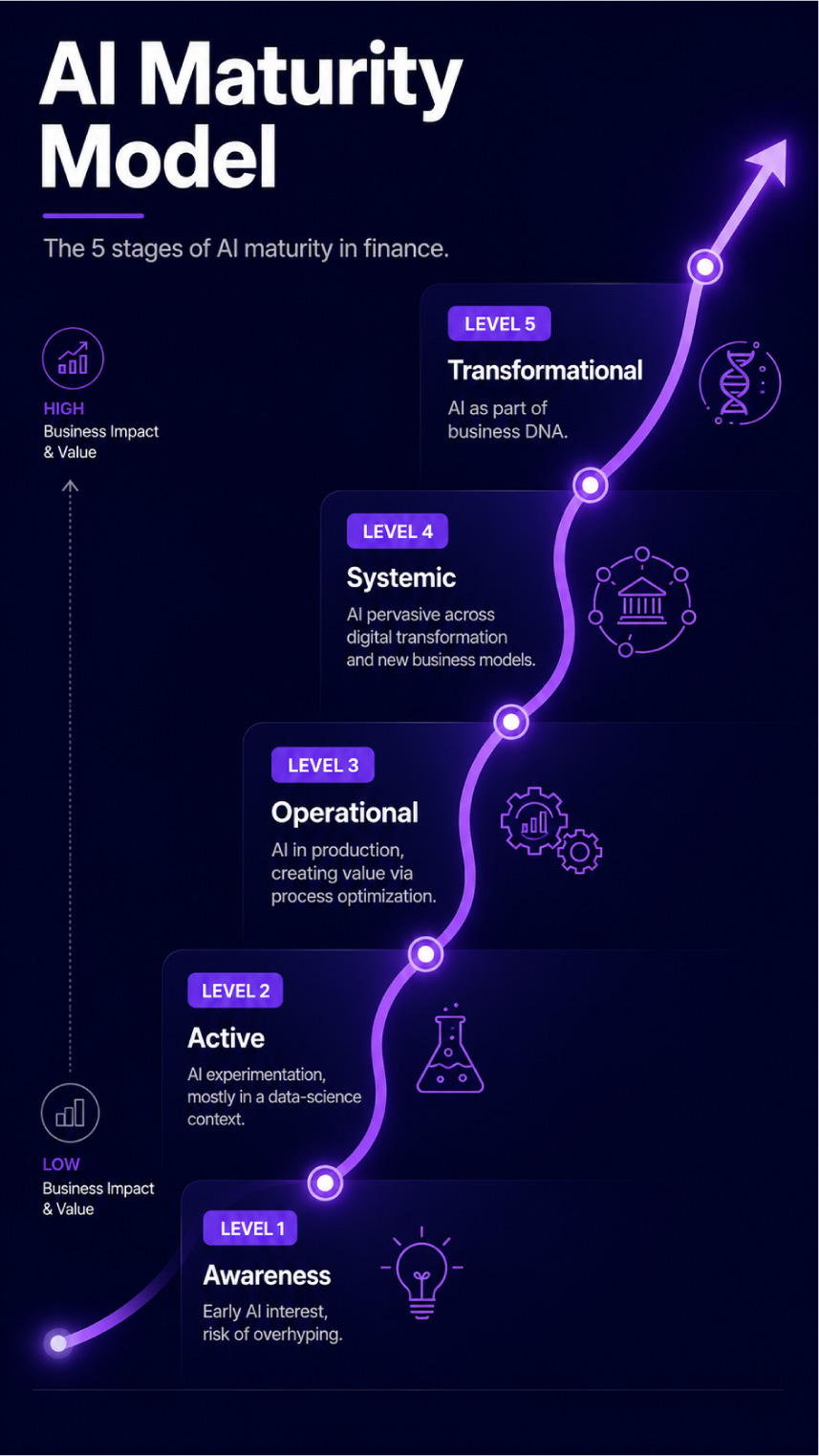
To deliver sustainable value, treat AI as a multi-year transformation:
Vision & Alignment
Link initiatives to business objectives and secure executive sponsorship.
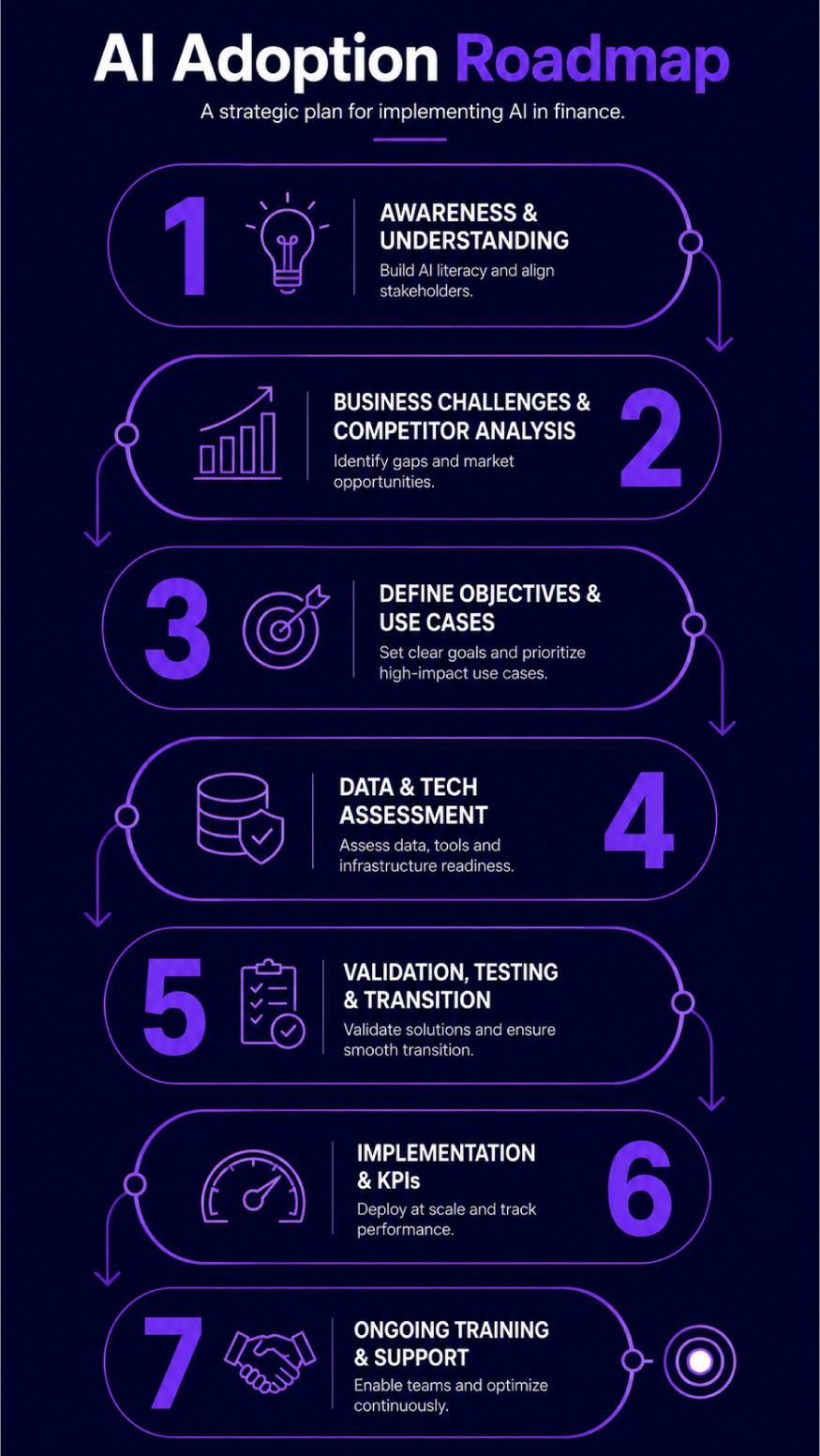
Phased Roadmap
Start with quick wins (reporting, basic analysis), then expand to forecasting, controls, and decision support.
People at the Center
Invest in role-specific training and celebrate early successes.
Strong Governance
Invest in role-specific training and celebrate early successes.
Measure & Iterate
Track time saved, accuracy, and employee satisfaction.
For mid-sized finance teams, AI offers an outsized opportunity: moving from overstretched operators to true strategic partners.
The difference between mediocre and transformative impact lies in the approach. A strategic, people-first integration turns AI into a sustainable competitive advantage.
The finance function of the future will be leaner in tactical work but far greater in influence.
Ready to make cash visibility your new competitive edge?
Book a no-obligation 30-minute diagnostic call and I’ll help you identify your top 3 priorities and quick wins — at no cost.
Take immediate control
of your financial operations
Do not let cultural friction or regulatory blind spots derail your integration.
Deploy proven interim financial leadership.